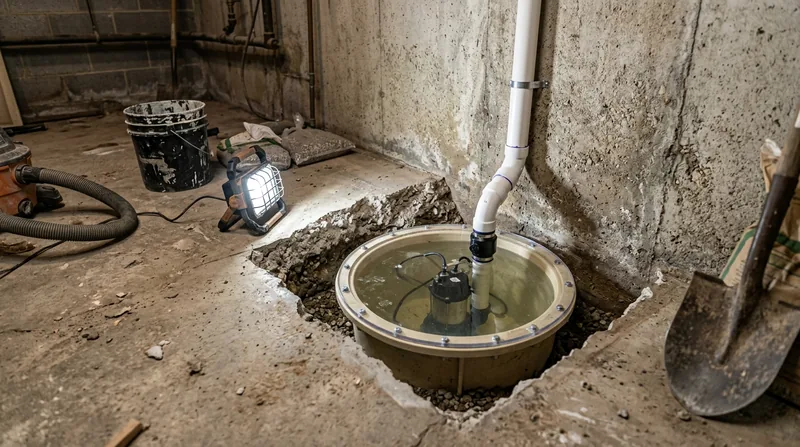




Topeka sits on a shelf of Kansas shale and clay-rich residual soil that swells hard after a May thunderstorm and shrinks back in an August dry spell. In the river bottoms near the Kansas River, the water table climbs fast and pushes groundwater against footings that were never designed for it. The 1900s brick and stone basements in Oakland, Potwin and North Topeka were built before anyone thought about a sump basin, and the 1940s and 1960s ranches across Hi-Crest and the east side often have a sump pit that is undersized or a pump that has not been replaced since the Clinton administration. Our Sump Pump Installation & Replacement in Topeka work is built around that reality: a correctly sized pump, a sealed basin, a real check valve and a discharge line that will not freeze in February or back up in June. If your wet basement is already showing water, the pump is the last line of defense, and it has to be right. Start with a free basement inspection so we can see what your pit is actually doing.
Why Sump Pump Failure Hits Topeka Basements Harder Than Most
Clay soil does not drain. When the spring water table rises over the river alluvium and the hillsides above downtown shed runoff into backyards, that water has nowhere to go but against the foundation and into the drain tile. A sump pump that quits during a storm is the difference between a damp wall and three inches of water on the floor. In older North Topeka homes, the footing drain is often clay tile that has shifted or silted in, so the pump is working harder than it was ever sized for.
- The pump short-cycles because the basin is too small for the inflow volume during a June downpour.
- The check valve is missing or stuck, so every cycle sends water back into the pit.
- The discharge line runs into a spot that freezes, and the pump burns out pushing against ice.
- The pit was never sealed, so the pump runs on humid basement air and soil gas instead of groundwater.
- The pump is a builder-grade unit past its service life, and nobody tested it before the storm season.
Any one of those failures turns a manageable wet basement into a flooded one, and they are all correctable in a single visit.
Key info: A home in the Potwin area with a 1930s stone foundation called us after a May storm because the pump ran continuously and never caught up. The pit was a 14-inch bucket with a 1/3 HP pump and no check valve. We set a proper 24-inch basin, upsized the pump and corrected the discharge to daylight at the grade break. The pump now cycles and shuts off the way it should.
If you want to understand how the pump fits into the whole system, the basement waterproofing page covers how the interior perimeter drain and the sump work together. For local code questions on discharge and drainage alterations, the City of Topeka's permit office is the authority to check: topeka.org.
How We Install or Replace a Sump Pump in a Topeka Basement
We do not drop a new pump into an old bucket and call it done. The pit, the pump, the check valve and the discharge are one system, and each part has to match the water volume your foundation actually sees. On a west-side walkout lot off the shale, that might mean a modest 1/3 HP unit. In the river bottoms, it often means a 1/2 HP primary with a battery backup behind it. We measure, we test, and we route the discharge where it will not freeze or dump water back against the wall.
- We inspect the existing pit, the drain tile inflow and the wall seepage to size the pump to the real load.
- We cut and set a new sealed sump basin with a gas-tight lid and a proper floor connection.
- We install the pump, a brass or PVC check valve, and a discharge line sized to the pump outlet.
- We route the discharge to daylight or a dry well with freeze protection built into the slope.
- We fill the pit, cycle the pump several times, and confirm the float and check valve hold.
Every install ends with a wet test, not a handshake, so you see the pump cycle before we leave.
Key info: A split-level in Hi-Crest had a discharge line that ran flat under the deck and froze solid in a January cold snap. The pump ran dry, overheated and seized. We replaced the pump, re-pitched the line to a frost-free outlet and added a battery backup sump pump so the next power flicker during a storm would not leave the pit unattended.
If the pit is filling because the drain tile is failing, the right fix may be a drain tile repair before any pump can keep up.
Sump Pump Options We Install in Topeka
Not every basement needs the same equipment. A slab-on-grade home on the outer tracts may need nothing more than a code-compliant pit for a future finish, while a 1920s river-bottom basement with active hydrostatic pressure needs a primary and a backup. Here is how the common approaches compare.
| Approach | Description | Best for |
|---|---|---|
| Primary pump replacement | New pump and check valve in an existing sound basin, sized to the inflow. | A working pit with a failed or aging pump. |
| New sealed basin and pump | Cut and set a larger basin, seal the lid, install the pump and discharge. | Undersized pits and unsealed buckets in older basements. |
| Primary plus battery backup | Two pumps in one pit, with a battery system for power outages. | River-bottom homes and any basement that floods during storms. |
| Discharge line correction | Re-route and re-pitch the line to a freeze-protected outlet. | Pumps that freeze, short-cycle or dump water against the wall. |
| Sump tied to interior drain tile | Perimeter drain feeding a properly sized basin and pump. | Active wall seepage and hydrostatic pressure, not just a wet pit. |
The right row for your house depends on what the pit is being asked to handle, and that is what the inspection determines.
Sump Pump Installation & Replacement Cost in Topeka: What to Expect
Most straightforward pump replacements in Topeka start around From $1,200, which covers a quality primary pump, a new check valve and a tested discharge connection. That figure moves with the basin size, the pump capacity, whether a battery backup is added, and how hard the discharge route is to run. A river-bottom basement that needs a 24-inch sealed basin and a long discharge to daylight sits at the upper end. A simple swap in a sound pit sits at the lower end.
Access matters too. A pit tucked behind a finished wall or under a low duct run takes longer than an open mechanical corner. We quote the actual scope after we see the pit, not over the phone. Getting two or three estimates is smart, and so is asking each contractor what pump model and what basin they intend to install. Our full pricing overview lays out the ranges so you can compare apples to apples.
Hiring a Sump Pump Contractor Near Me in Topeka: What to Check
Anyone with a truck can sell you a pump. What you want is a contractor who will size it to your foundation, pull the right permit if the discharge or drainage is being altered, and stand behind the work. Ask for the license and insurance certificate before work starts, and confirm the policy covers below-grade work. Ask how they will route the discharge and whether they will test it in front of you.
- Confirm the contractor is licensed and insured, and ask for the certificate in writing.
- Get two or three written estimates that name the pump model and basin size.
- Ask for local references from basements similar to yours, not just any job.
- Check with the City of Topeka building department on whether your discharge or drainage change needs a permit.
- Read the warranty terms and confirm they are transferable if you sell the house.
A contractor who hesitates on any of those questions is telling you something useful. You can reach us through the contact page to schedule an inspection and get a straight answer on what your pit needs.
Sump Pump Installation & Replacement in Topeka: Pricing Guide
| Service | Price | Details |
|---|---|---|
| Primary pump replacement | Starting at $1,200 | Quality pump, new check valve and tested discharge in an existing sound basin. |
| New sealed basin and pump | Starting at $1,850 | Larger cut-in basin, gas-tight lid, pump and discharge for undersized pits. |
| Primary plus battery backup | Starting at $2,400 | Two pumps in one pit with battery system for storm-season power outages. |
| Discharge line correction | Starting at $450 | Re-route and re-pitch the line to a freeze-protected outlet away from the wall. |
| Complex or large-scale job | On estimate | Finished-wall access or long daylight runs need an on-site look before pricing. |
| Estimate | Free | Response within 24h at (785) 783-0183, no obligation to book. |
Indicative pricing, the exact cost depends on square footage, finish, and site access. Free personalized estimate within 24h at (785) 783-0183.


