Why Topeka Basements Face Unique Waterproofing Challenges
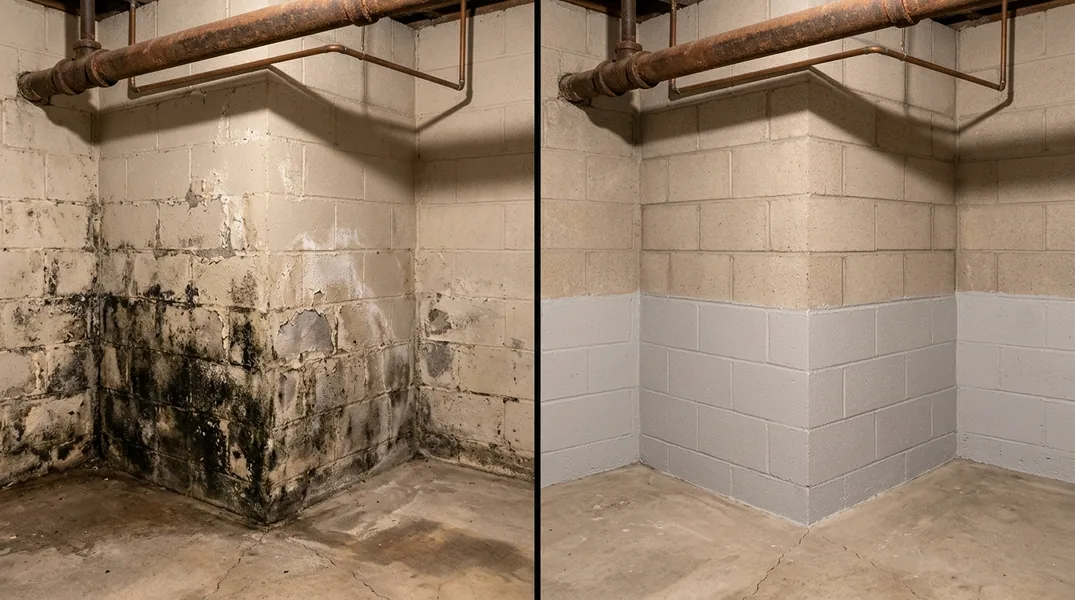
Homeowners in Topeka know that Kansas weather does not make basement care easy. The region swings between long dry spells and intense spring storms, and the clay-heavy soils common around Shawnee County expand when wet and crack when dry. That cycle puts constant pressure on foundation walls, and water finds its way through hairline cracks, cove joints, and porous block. If you have noticed a damp smell, white powder on the walls, or water pooling after a heavy rain, you are not alone, and you are not overreacting.
The good news is that there are two proven ways to solve the problem: working from the inside or working from the outside. Each approach has real strengths, and the right choice depends on your home's age, the type of foundation, the grade of your lot, and how the water is actually getting in. Below we break down the honest differences between interior vs exterior waterproofing so you can make a confident decision for your property.
How Interior Waterproofing Works (and When It Wins)
An Interior Drain Tile System is installed along the inside perimeter of your basement footing. It captures water that has already entered the soil around the foundation and routes it to a sump pump, which discharges it safely away from the house. This approach is popular in Topeka because it can be installed year-round, it does not require digging up landscaping, decks, or driveways, and it typically costs less than excavating the exterior. It also addresses the most common entry points, including the cove joint where the wall meets the floor.
Interior systems shine when the water problem is hydrostatic pressure from saturated soil rather than a single obvious defect. If your basement is finished or you plan to finish it, interior drainage combined with a vapor barrier and proper dehumidification keeps the space dry and usable. The tradeoff is that interior work does not stop water from touching the outside of the foundation wall, so in homes with severe wall deterioration or very high water tables, a different strategy may be needed. A thorough inspection tells you which situation you are in.
How Exterior Waterproofing Works (and When It Wins)
Exterior Basement Waterproofing attacks the problem at its source. The soil around the foundation is excavated, the walls are cleaned and repaired, a waterproof membrane is applied, and a drainage system is installed at the footing to carry water away. This is the classic drain tile vs exterior membrane comparison: the membrane blocks water from entering the wall in the first place, while the drain tile manages groundwater before it can build pressure. For homes with visible foundation cracks, bowing walls, or repeated seepage despite interior fixes, exterior work often provides the most durable long-term result.
The tradeoff is disruption and cost. Excavation means removing and replacing landscaping, patios, and sometimes walkways, and the project takes longer. In Topeka, where mature trees and established landscaping are common in older neighborhoods, that matters. Exterior waterproofing is also the better choice when the goal is to protect the structural integrity of the foundation itself, not just keep the floor dry. Many homeowners pair exterior membrane work with Foundation Waterproofing repairs to address cracks and wall stabilization at the same time.
Interior vs Exterior Waterproofing: A Side-by-Side Comparison
When comparing interior vs exterior waterproofing, think about what each method actually solves. Interior drainage handles water that is already inside the foundation footprint and is ideal for finished basements, slab-on-grade issues, and homes where exterior access is limited. It is generally faster and less expensive, and it can be done in any season. Exterior membrane and drainage work stops water before it reaches the wall, protects the concrete or block itself, and is the stronger choice for structural concerns and long-term prevention.
There is no universal winner. A 1950s ranch with a cracked block wall and a soggy side yard may need exterior work, while a newer home with a damp floor and high water table may be perfectly served by an interior system. Some homes benefit from both. The honest answer comes from an on-site evaluation of your foundation type, grading, gutter discharge, and the pattern of moisture you are seeing. That is why a professional assessment matters more than any generic chart. If you want a clear recommendation for your specific house, reach out for a free estimate and we will walk the property with you.
Basement Waterproofing Cost in Topeka: What to Budget
Homeowners researching Topeka basement waterproofing almost always ask about pricing first, and that is fair. Interior drain tile systems are typically the lower-cost option because they require less excavation and labor, while exterior membrane projects run higher due to digging, soil removal, and restoration of landscaping. The final number depends on linear footage, foundation type, sump pump configuration, and whether structural repairs are needed. A small partial system is a different investment than a full-perimeter installation with a backup pump.
Be cautious of any quote given over the phone without an inspection. Waterproofing is not a commodity, and a low bid that skips diagnostics often leads to callbacks. A reputable contractor will explain what is included, how long the work takes, and what warranty covers it. For a realistic range tailored to your home in Topeka or nearby communities like Lawrence and Perry, schedule an inspection and ask for a written scope of work. You deserve clear numbers before anyone starts digging.
Basement Waterproofing Near Me: When to Call a Pro
Some moisture issues are truly minor, like a single condensation problem solved by a dehumidifier. But certain signs should prompt a call right away: water on the floor after storms, efflorescence on block walls, rust at the base of appliances, musty odors that return after cleaning, or visible cracks that are widening. In Kansas, where the freeze-thaw cycle and expansive clay soils work together, small problems can become structural ones faster than many homeowners expect. Waiting rarely saves money.
If you are searching for basement waterproofing near me in the Topeka area, look for a local company that inspects before it sells, explains the difference between interior and exterior options honestly, and stands behind the work. Topeka Waterproofing serves homeowners throughout the region, including Lecompton, and we are happy to evaluate your situation. Call (785) 783-0183 or request a free estimate today. A dry basement starts with one honest conversation.
Looking for a professional basement waterproofing contractor in Topeka? Topeka Waterproofing responds fast for all your basement waterproofing needs.
Get a Free QuoteOur services: Basement Waterproofing · Interior Drain Tile System · Exterior Basement Waterproofing