The Geology Under Your Feet: Why Topeka Clay Soil Is Different
If you live in Topeka, you are sitting on some of the most active soil in the country. The region is covered in expansive clay soils, often called swelling clay, that behave very differently from the sandy or rocky ground homeowners imagine. This clay is made of tiny, plate-like minerals that absorb water and expand dramatically. When dry, the same soil shrinks and pulls away from your foundation. This constant cycle of swelling and shrinking is the single biggest cause of foundation cracks and basement leaks in the Topeka area.
What makes Kansas clay soil especially challenging is how quickly it can change. A wet spring followed by a dry summer can cause the soil around your home to move several inches. That movement exerts enormous pressure on basement walls and floor slabs. Many homeowners in Topeka first notice hairline cracks in the drywall or a sticky basement door and assume it is normal settling. In reality, it is often the early warning sign of soil movement that will only get worse without intervention. Understanding this geology is the first step toward protecting your home.
How Swelling Clay Causes Kansas Foundation Cracks and Basement Leaks
When clay soil absorbs water, it expands outward and upward. Against a basement wall, that expansion creates hydrostatic pressure, a force that pushes against the wall from the outside. Over time, this pressure causes horizontal cracks, bowing walls, and eventually structural failure if left unaddressed. On the flip side, when the soil dries and shrinks, it leaves a gap around the foundation. Water then pours into that gap during the next rain, saturating the soil again and starting the cycle over. This is why swelling clay basement leaks are so common in Topeka and why they tend to return if the underlying soil issue is not managed.
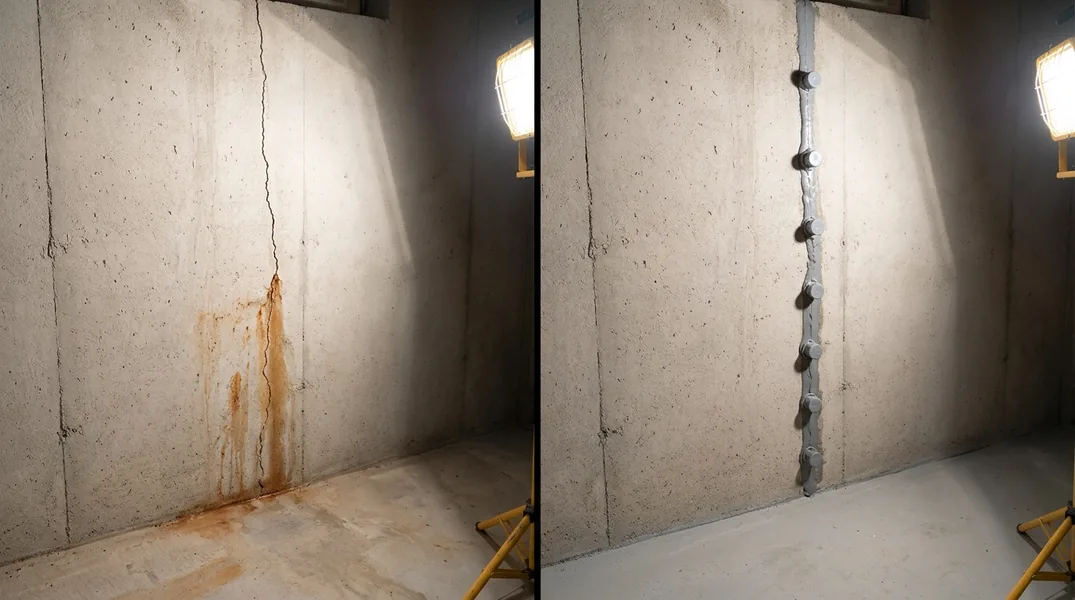
The floor is vulnerable too. As the soil beneath a basement slab dries and shrinks, it can leave voids that cause the concrete to crack or settle unevenly. Homeowners often describe a floor that feels hollow or sounds different when walked on. These cracks are not just cosmetic: they create direct pathways for water and radon gas to enter the home. Recognizing the link between soil movement and foundation cracks is essential, because repairing the crack without addressing the soil and water pressure usually leads to the same problem reappearing within a few seasons.
Warning Signs Your Topeka Home Is Losing the Battle Against Soil Movement
Not every crack means your foundation is failing, but some patterns deserve immediate attention. Horizontal cracks in a basement wall, especially those wider than a quarter inch, are a red flag for soil pressure. Stair-step cracks in brick or block walls, doors that stick only in certain seasons, and gaps between the wall and floor are all signs that movement is active. You may also notice efflorescence, the white powdery residue on basement walls that indicates water is moving through the concrete. Musty odors and high humidity are often the first things homeowners notice before they ever see a crack.
Outside the house, look for soil that has pulled away from the foundation, sunken areas in the yard, or downspouts that dump water right next to the wall. In Topeka, where the clay holds water like a sponge, poor drainage amplifies every one of these problems. If you spot any of these signs, it is worth having a professional evaluate the situation before the next wet season arrives. Small issues caught early are far less expensive to fix than a bowed wall or a finished basement full of water.
Basement Waterproofing Near Me: Solutions That Work With Kansas Clay
The right solution depends on what the soil and water are doing to your specific home, but most effective strategies share one goal: manage water before it reaches the foundation and relieve pressure against the walls. Basement Waterproofing in this region often starts with improving exterior drainage, sealing cracks, and installing a system to capture water that does get in. For many homes, an Interior Drain Tile System is the most reliable fix because it intercepts water at the cove joint and directs it to a sump pump, keeping the basement dry even when the clay is fully saturated.
In more severe cases, Exterior Basement Waterproofing may be necessary to address hydrostatic pressure directly. This involves excavating around the foundation, applying a waterproof membrane, and installing drainage to move water away from the walls. Foundation Waterproofing also plays a role in stabilizing the structure and preventing further cracking. A reputable contractor will evaluate your soil conditions, the age of your home, and the type of cracks before recommending a plan. If you are searching for basement waterproofing near me in the Topeka area, look for a company that understands local clay behavior rather than offering a one-size-fits-all fix.
Basement Waterproofing Cost in Topeka: What to Budget
Homeowners often ask what waterproofing will cost, and the honest answer is that it varies with the size of the problem. A simple crack injection or exterior grading adjustment costs far less than a full interior drain tile system or exterior excavation. Factors that affect pricing include the length of the basement walls, accessibility, whether a sump pump is needed, and the extent of existing damage. In Topeka, the severity of clay movement means that delaying repairs often increases the final bill, since water damage compounds over time.
The best way to get an accurate number is to have a professional inspect your home and explain the options in plain language. A good contractor will separate urgent structural issues from maintenance items and help you prioritize. Rather than guessing at a budget, request a free estimate so you can compare real numbers for your specific property. Keep in mind that waterproofing is also an investment in your home's value, since a dry basement and stable foundation are major selling points in this region.
Protecting Your Home for the Long Haul
Living on Kansas clay soil does not mean you have to accept a wet basement or cracking walls. It does mean being proactive. Keep gutters clean, extend downspouts several feet from the foundation, and maintain grading that slopes away from the house. Watch for new cracks and address them early. These simple habits reduce the amount of water that reaches the clay around your foundation and lessen the swelling and shrinking cycle that causes so much damage.
When problems do appear, work with a local company that understands how Topeka's soil behaves. Topeka Waterproofing helps homeowners diagnose foundation cracks and basement leaks caused by swelling clay and soil movement, and we can recommend a solution that fits your home and budget. Call (785) 783-0183 to schedule an inspection or to ask questions about your basement. A dry, stable foundation is achievable, even on Kansas clay, with the right approach and a little local expertise.
Looking for a professional basement waterproofing contractor in Topeka? Topeka Waterproofing responds fast for all your basement waterproofing needs.
Get a Free QuoteOur services: Basement Waterproofing · Interior Drain Tile System · Exterior Basement Waterproofing