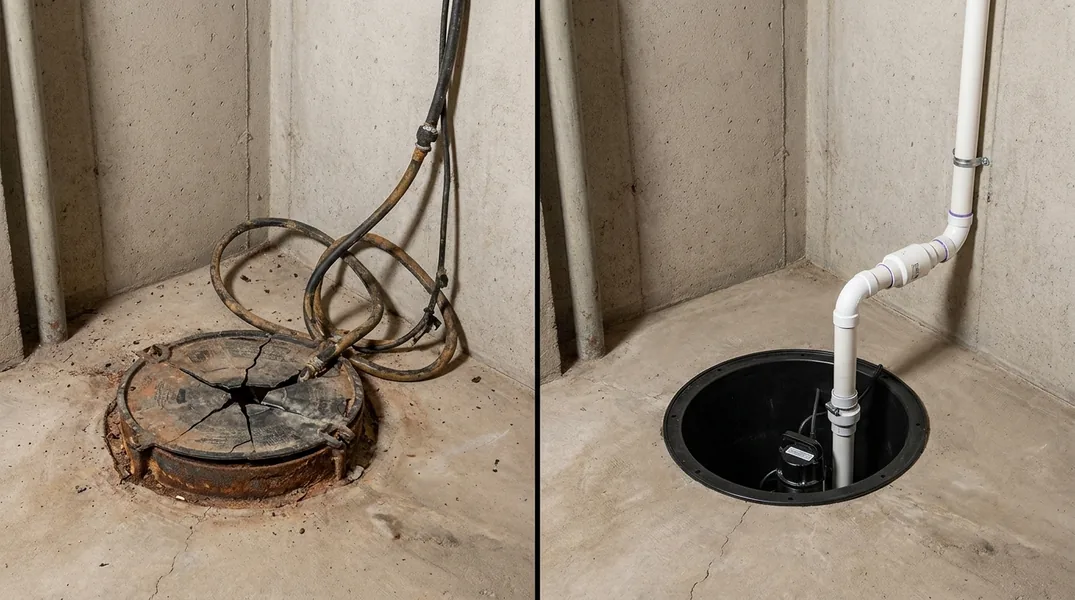
Why Sump Pump Maintenance Matters Before Storm Season in Topeka
Spring and summer in Topeka bring powerful thunderstorms, heavy rain, and the occasional severe weather system that can dump inches of water in a matter of hours. For homeowners with a basement, that water has nowhere to go but down, and your sump pump is the first line of defense against a flooded basement. When it works, you never think about it. When it fails, you are looking at thousands of dollars in water damage, ruined belongings, and potential mold growth.
The problem is that sump pumps sit quietly in a pit, often out of sight and out of mind, until the moment you need them most. A pump that has not been serviced in a year or more may have a stuck float, a clogged intake, or a failing check valve that nobody notices until the storm hits. That is why routine sump pump maintenance before storm season is one of the smartest investments a homeowner can make. A few minutes of inspection now can save you a very expensive cleanup later.
The Sump Pump Check Valve: A Small Part With a Big Job
If there is one component homeowners overlook most often, it is the sump pump check valve. This one-way valve sits on the discharge pipe and prevents water from flowing back into the pit after the pump shuts off. Without a working check valve, every time the pump cycles, some of the water it just pushed out drains right back in. That means the pump runs more often, wears out faster, and may not keep up during a heavy storm.
A failed check valve can also cause a more serious problem: water sitting in the discharge line can freeze or stagnate, and in some cases the pump can short-cycle to the point of burnout. During your pre-season inspection, make sure the check valve is the correct size, is installed in the right orientation, and is not clogged with debris or mineral buildup. If it is old or questionable, replacing it is inexpensive and takes only a few minutes. It is one of the highest-value steps in any sump pump maintenance routine.
Battery Backup Sump Pump: Your Safety Net During a Power Outage
Here is the scenario that catches many homeowners off guard: a severe storm rolls through Topeka, the power goes out, and the rain keeps falling. Your primary sump pump is electric, so without power it is completely useless. Meanwhile, water is still filling the pit. This is exactly when a battery backup sump pump earns its keep. It runs on a charged battery and kicks in automatically when the main pump loses power or cannot keep up with the water volume.
If you already have a backup system, test it before storm season. Most units have a test button, but you should also check the battery water level (if it is a wet-cell type), inspect the terminals for corrosion, and confirm the charger is working. Batteries typically last three to five years, so an older battery may hold a charge today and fail when you need it. If you do not have a backup pump yet, this is the year to add one. Power outages during storms are common, and a backup system is the difference between a dry basement and a flooded one.
Storm Season Basement Prep: A Simple Maintenance Checklist
Beyond the check valve and backup battery, there are several other steps that make up a thorough sump pump maintenance routine. Start by removing the pump from the pit and cleaning out any silt, gravel, or debris that has accumulated. A clogged intake screen forces the pump to work harder and can cause it to overheat. While the pump is out, check the float switch by lifting it manually to confirm the pump turns on and off smoothly. A float that sticks or hesitates is a warning sign that the switch may fail entirely.
Next, inspect the discharge line for cracks, loose connections, or obstructions, and make sure it directs water well away from the foundation. If your discharge line empties too close to the house, that water can seep right back into the storm season basement you are trying to protect. Finally, test the pump by pouring a bucket of water into the pit and watching how quickly it clears. If the pump is slow, noisy, or cycles strangely, have it looked at before the first big storm. For homeowners who want a professional set of eyes on the whole system, a free estimate from Topeka Waterproofing is a smart first step.
When Power Outage Basement Flooding Risk Is High: Call a Pro
Some warning signs should not be ignored. If your pump runs constantly, smells like it is burning, trips the breaker, or leaves water in the pit after cycling, it is time to call a professional. The same goes for any sign of power outage basement flooding risk, such as a backup system that will not hold a charge or a discharge line that keeps backing up. These issues rarely fix themselves, and they tend to fail at the worst possible moment, usually during the heaviest rain of the year.
At Topeka Waterproofing, we help homeowners across the area prepare their basements for storm season with honest inspections and dependable repairs. Whether you need a new check valve, a backup pump installed, or a full look at your drainage system, we can help you understand what your home needs and what it will cost. Call (785) 783-0183 to schedule a visit, or reach out online for a free estimate. A little preparation now beats a flooded basement later.
Looking for a professional basement waterproofing contractor in Topeka? Topeka Waterproofing responds fast for all your basement waterproofing needs.
Get a Free QuoteOur services: Basement Waterproofing · Interior Drain Tile System · Exterior Basement Waterproofing